Frida Kahlo de Rivera (6 July 1907 – 13 July 1954) was a Mexican artist who became world famous for her unusual self-portraits, which show her with a moustache and eyebrows growing together. But behind her colourful paintings lies a tragic life story.
Life
Frida was encouraged artistically as a child. Her father, a German immigrant and photographer, introduced her to the basics of photography, while Frida’s mother taught her sewing and embroidery. As a teenager, she had a serious road accident that would change her life forever. An iron rod pierced her pelvis and meant that she spent most of her days lying down or wearing a steel corset. After the operation, Frida was bedridden for a long time and began to paint self-portraits to pass the time. A mirror was hung above her bed and a couch was reinforced so that she could paint lying down.
Her great love was the Mexican artist Diego Rivera, who caused a sensation with his political-revolutionary murals. He inspired Kahlo in her art and in her political views. Both were supporters of the fledgling Soviet Union. Kahlo’s relationship with Rivera was marked by ups and downs – they both had several love affairs in addition to their marriage. They divorced and remarried a year later. Throughout her life, Diego Rivera remained the man at her side.
In the last years before her death, Frida Kahlo was bedridden after having her lower right leg amputated. She died of a pulmonary embolism in 1954.
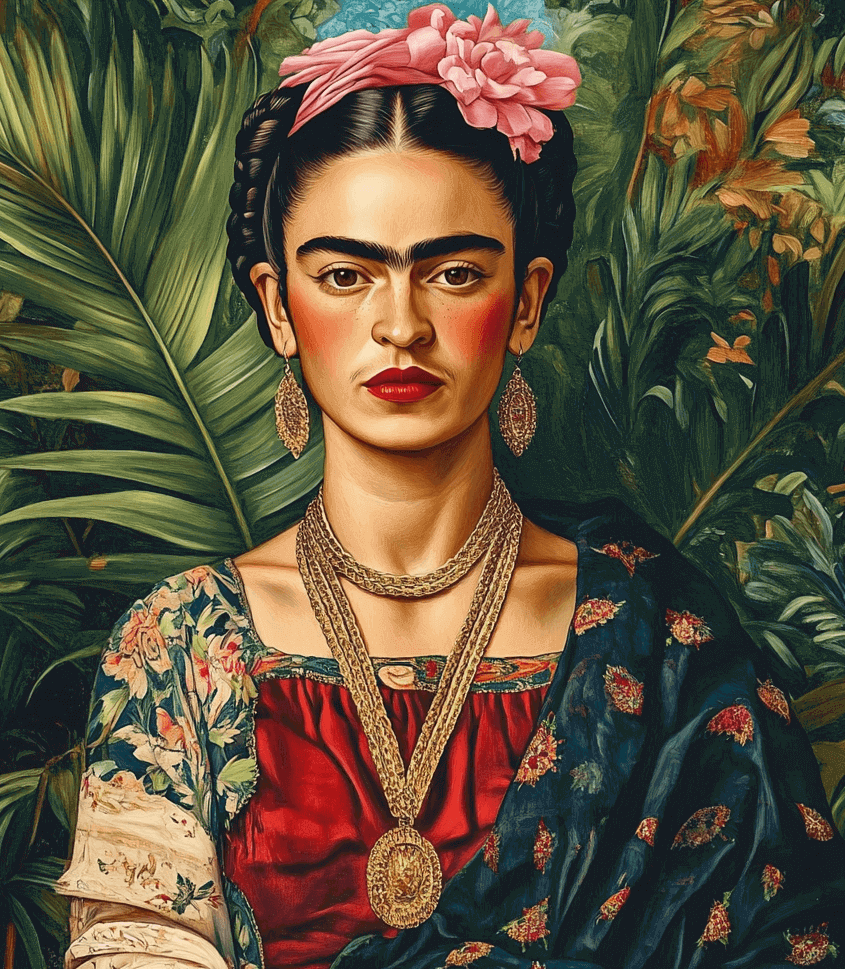
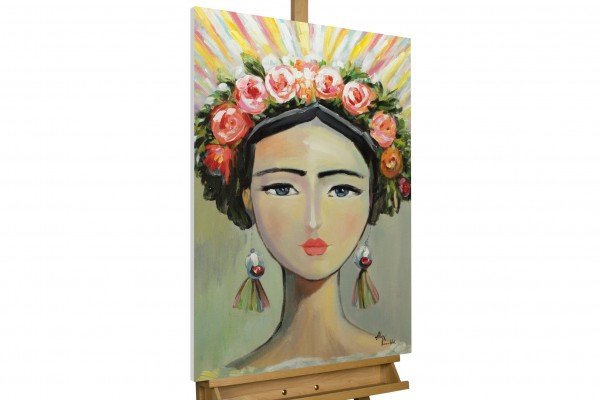
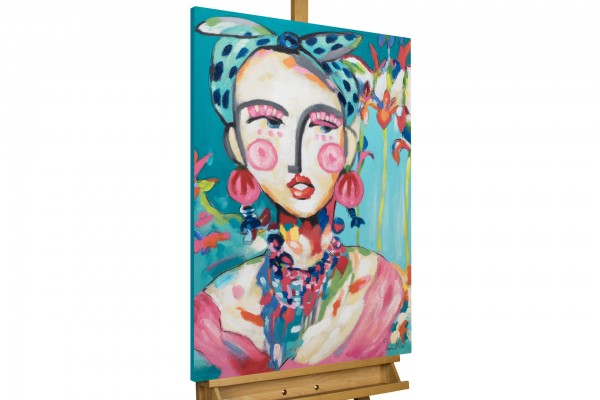
As well as her art and eventful life, Frida Kahlo’s striking physical appearance has made her one of the most popular figures in modern pop culture. Dressed in brightly coloured folkloric costumes, with lavish jewellery and upswept hair, the artist was proud of her indigenous roots. She was also full of patriotism, which she expressed in her paintings of Mexican culture.
Work
Kahlo’s style combined surreal elements with pictorial means of reality and is therefore classified as Surrealism. She herself could not identify with the movement. “They thought I was a surrealist, but I was not. I never painted dreams. I painted my own reality.”
Frida, who suffered for the rest of her life from the consequences of the accident and was therefore unable to have children, used her art to cope with her physical and emotional pain. In her world-famous self-portraits, the nails piercing her body symbolise the agony she suffered. The corset expresses the restriction of her freedom.
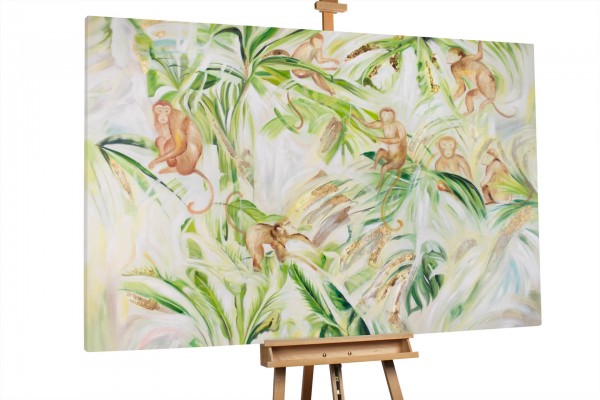
In addition to themes of pain, death and her own infertility, the artist also explored themes of Mexican society, culture and social identity. Her self-portraits also include exotic animals such as monkeys, deer and birds. She kept most of them not just as pets, but to represent her own emotional state, such as loneliness.
Her first exhibition was held in New York in 1938 by the gallerist Julien Levy. It was not until 1953 that her work was exhibited in Mexico – a great honour for Frida Kahlo, who was very attached to her homeland.
The Blue House in Mexico, where Frida Kahlo lived with her husband Diego Rivera from 1929 to 1954, is still open to the public. It has been converted into a museum and contains many of Kahlo’s original works.